一 | 【 앵커멘트 】 그런데, 야자수 농장에서 주검으로 발견된 장미란 씨를 둘러싸고 인근 주민들은 의문을 제기합니다. 야자수에 뾰족한 가시가 있는데다 가지가 약해서 여성 혼자 벌인 일은 아닐 거라는 얘깁니다. 이교욱 기자가 들어봤습니다.【 기자 】 야자수 농장 앞을 지나다니는 현지 주민들이 가장 먼저 의문을 제기하는 건 야자수의 가시입니다. 다른 나무와 다르게 야자수에는 가시가 많아 행동에 제약이 있었을 것이라는 지적입니다.▶ 인터뷰 : 허춘월 / 인근 주민- "아무리 독한 마음을 먹어도 그 나무에 매달릴 수는 없는 거 같아요. 가시들도 있고 나무가 보기에만 좋은(튼튼한) 거지…." 더군다나 여성 혼자 벌일 수 있는 일도 아닐 것이라는 의문도 나옵니다. ▶ 인터뷰 : 인근 주민- "남자도 아니고 여자가 거기 어떻게 올라가요?"▶ 스탠딩 : 이교욱 / 기자- "주민들이 말한 것처럼 야자수 줄기에는 가시들이 돋아있고, 나무 위쪽은 약해서 뭔가를 매달거나 하긴 어려워 보입니다." 경찰은 타살 가능성을 낮게 보고 있지만, 범죄 혐의도 배제할 수 없는 만큼 다각도로 수사해야 한다는 지적도 제기되고 있습니다.▶ 인터뷰 : 이수정 / 경기대 범죄심리학과 교수- "젊은 여성이 야심한 시간에 인적이 드문 숲속으로 갈 가능성은 굉장히 희박해 보이거든요." 장 씨 남자친구는 야자수 농장이 장 씨가 평소 무서워했던 곳인데다, 당시 그런 선택을 할 심리 상태는 아니었다고 언급했습니다. MBN뉴스 이교욱입니다. 영상취재 : 김진성·김민호·최규태 기자 영상편집 : 유수진 그 래 픽 : 김규민。
二 |
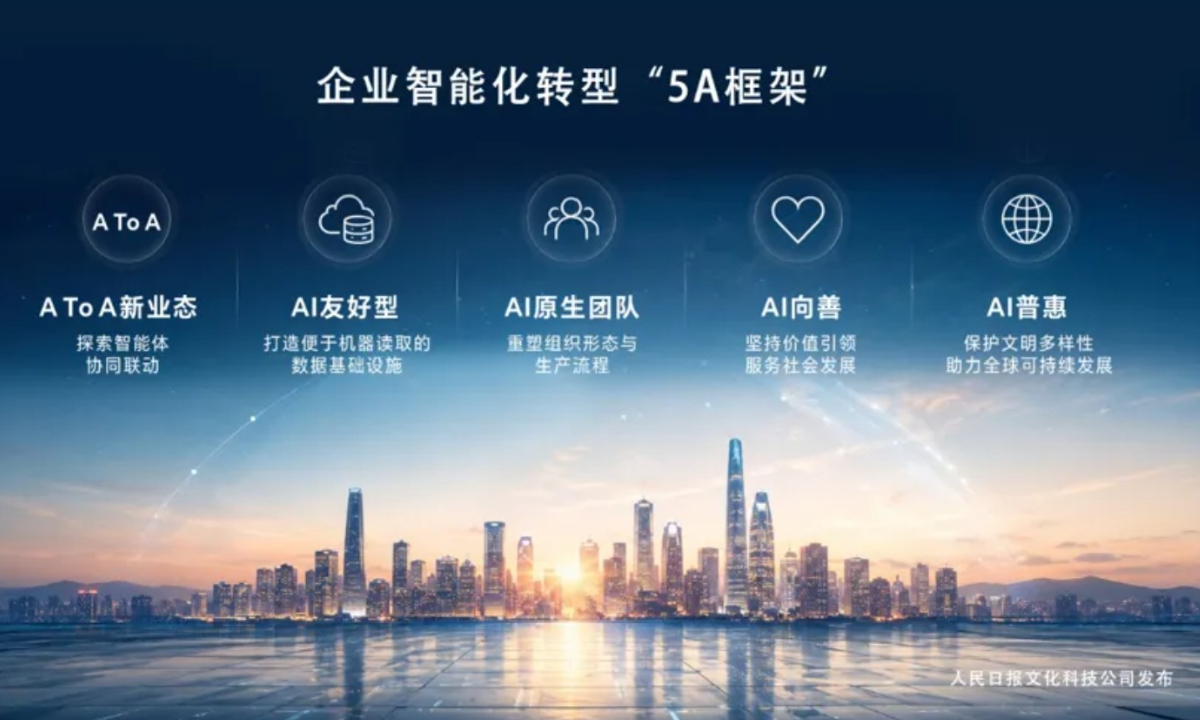
An illustration of the “5A Framework” for enterprise intelligent transformation unveiled at the 2026 Digital Intelligent Economy Forum in Langfang, North China’s Hebei Province, on August 12, 2026. Photo: people.cn
The 2026 Digital Intelligent Economy Forum was held in Langfang, North China’s Hebei Province, on Wednesday. At the forum, organizer People's Daily Cultural Technology Corporation unveiled a “5A Framework” for enterprise intelligent transformation, aimed at helping businesses comprehensively innovate their business models, organizational structures and service systems in the artificial intelligence (AI) era. A To A: Exploring new models for agent collaboration AI is pushing the internet into a new stage characterized by the widespread participation of AI agents. In the future, China could develop an ecosystem comprising tens of billions of agent applications, while the global “digital population” could reach hundreds of billions. Following To B (business-oriented) and To C (consumer-oriented) models, enterprises and institutions should actively explore the emerging To A (agent-oriented) model. To enable better interaction and coordination among agents, unified data, technology, interface and service standards need to be established, while new business systems and service models should be cultivated. AI-friendly: Building machine-readable data infrastructure Today’s internet user interfaces are primarily designed for human browsing. The first step, therefore, should be to build an “AI-friendly” data system that is better suited to being read, understood and accessed by AI. By structuring content resources and turning them into organized knowledge, while strengthening ontology systems and knowledge graphs, such a system can improve AI’s ability to understand and apply information. On this basis, integrated hardware and software infrastructure combining computing architecture with data systems can be developed for AI applications. AI-native teams: Reshaping organizations and workflows AI is profoundly reshaping organizational structures and ways of working. AI-native teams should redefine job responsibilities, organizational structures and business processes around the A-To-A model and AI-friendly services, enabling “everyone to have multiple AI agents.” Professional capabilities and business experience can be encapsulated into “digital employees,” promoting autonomous learning by agents, multi-agent collaboration and the evolution of collective intelligence, thereby multiplying per-capita productivity. AI for good: Putting values first, serving social development AI also requires values-based guidance. Guided by the principle of “being people-centered and using AI for good,” efforts should follow the approach of “governing AI with AI and guiding intelligence with wisdom,” ensuring that AI always serves social development, the public interest and people’s needs. The “Mainstream Values Corpus,” whose development was launched by the People’s Daily in May 2023, has already begun to take shape and has been validated through numerous large-model applications. Inclusive AI: Protecting cultural diversity, advancing global sustainable development AI should not become merely “a game for rich countries and rich people,” but should benefit all countries. Efforts should be made to actively participate in global initiatives for inclusive AI, bridge the digital and intelligent divide, and enable more organizations and individuals to share the benefits of development on an equal footing, so that AI can truly become a powerful positive force for improving the well-being of all humanity and advancing human civilization. This was translated and compiled by the Global Times, based on an article originally published on people.cn on August 12, 2026.
。
Current article:http://vkk.cengzaodengchawonin.cyou/oq2mem/20260826/9042.html